
Origem
Portuguese cooking of memory, made with precision.
Portuguese cooking was not born in a single moment. It was built over centuries, by the hands of those who turned simplicity into heritage. That legacy lives in every recipe, every piece and every corner of this house.
Concept
Not reinvention: work
The aim is not to reinvent tradition, but to work the recipes and produce that have always belonged to Portuguese cooking, giving them another reading. Technique lets us evolve and creativity pushes us to see tradition differently, but neither makes sense if we forget where we come from.
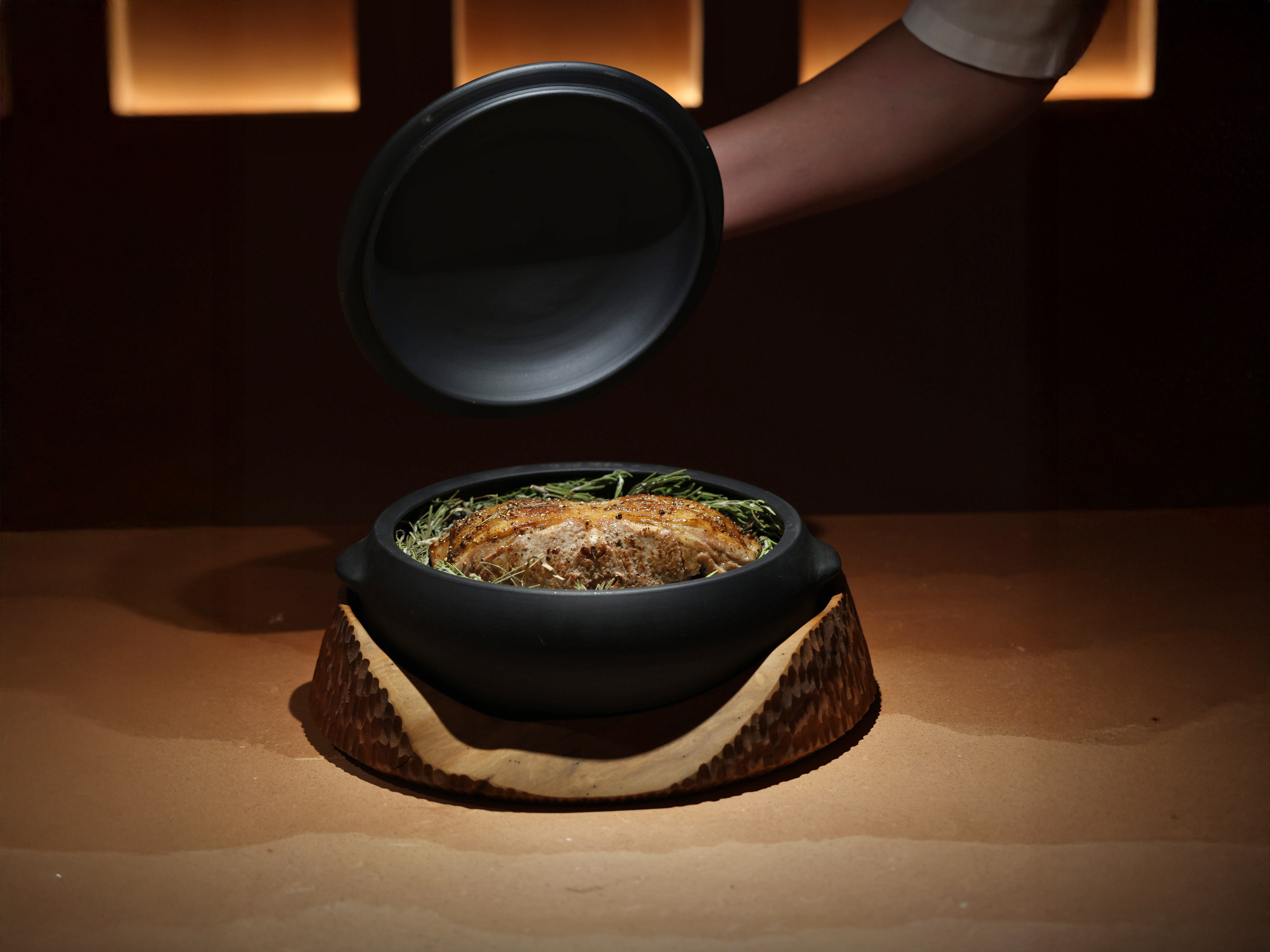
We rely largely on traditional techniques: the mortar, fermentation, brines and cures, the pot, the grill, clay, cast iron, charcoal and wood. They were born to preserve food; here they also build flavour and texture.
Origins
From north to south, with what was always close at hand.
Memory
Recipes shaped by generations and by encounters between peoples.
Produce
Chosen from the land and the seasons, before the recipe.
Inland
Fewer spices, more herbs, as the old pantry allowed.
Partners
99% Portuguese, across ingredients, wine and the pieces in the room.
Technique
Clay, iron, charcoal and wood in the service of flavour.
Sharing
Dishes built for the middle of the table.
The house
A new story inside the old stable
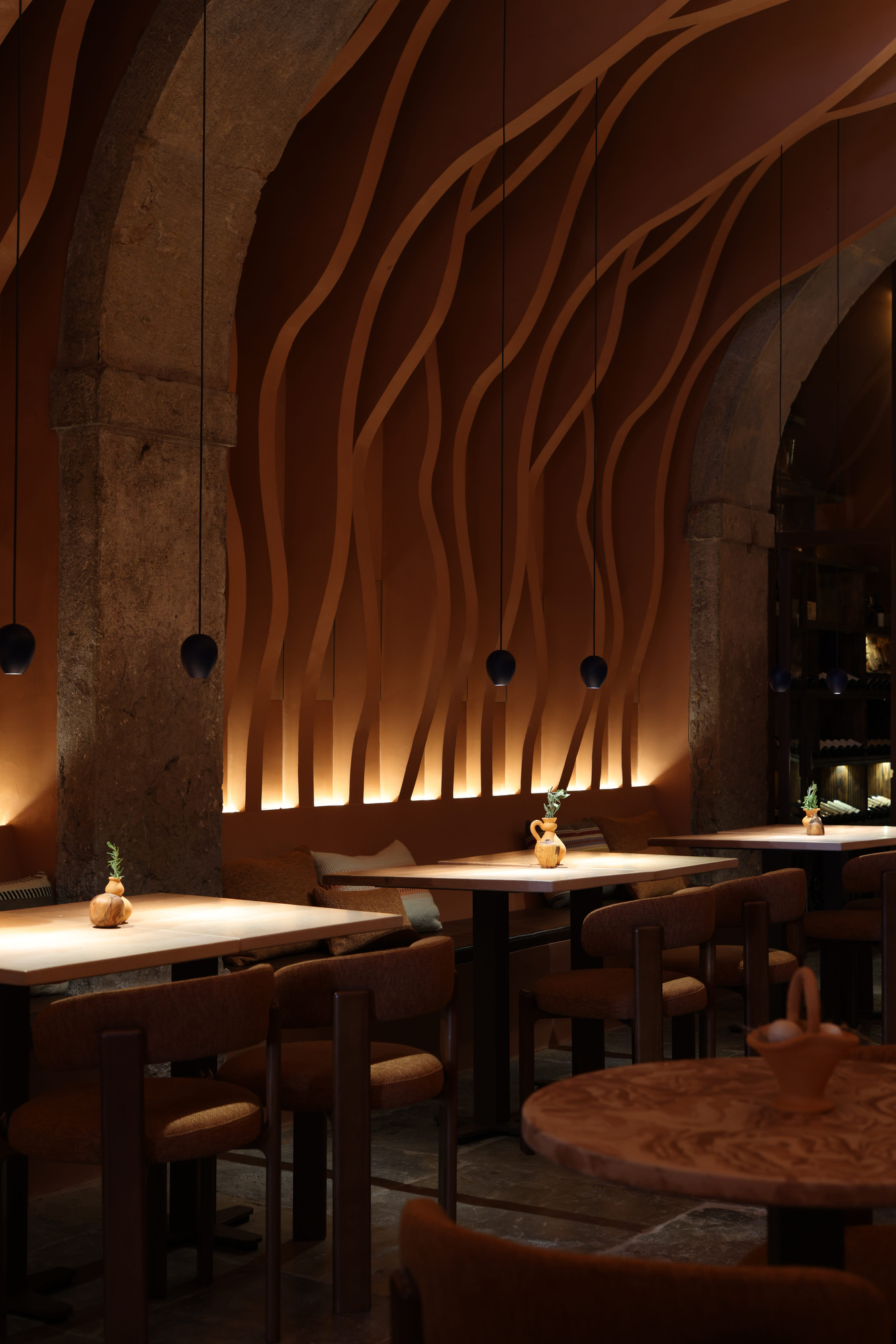
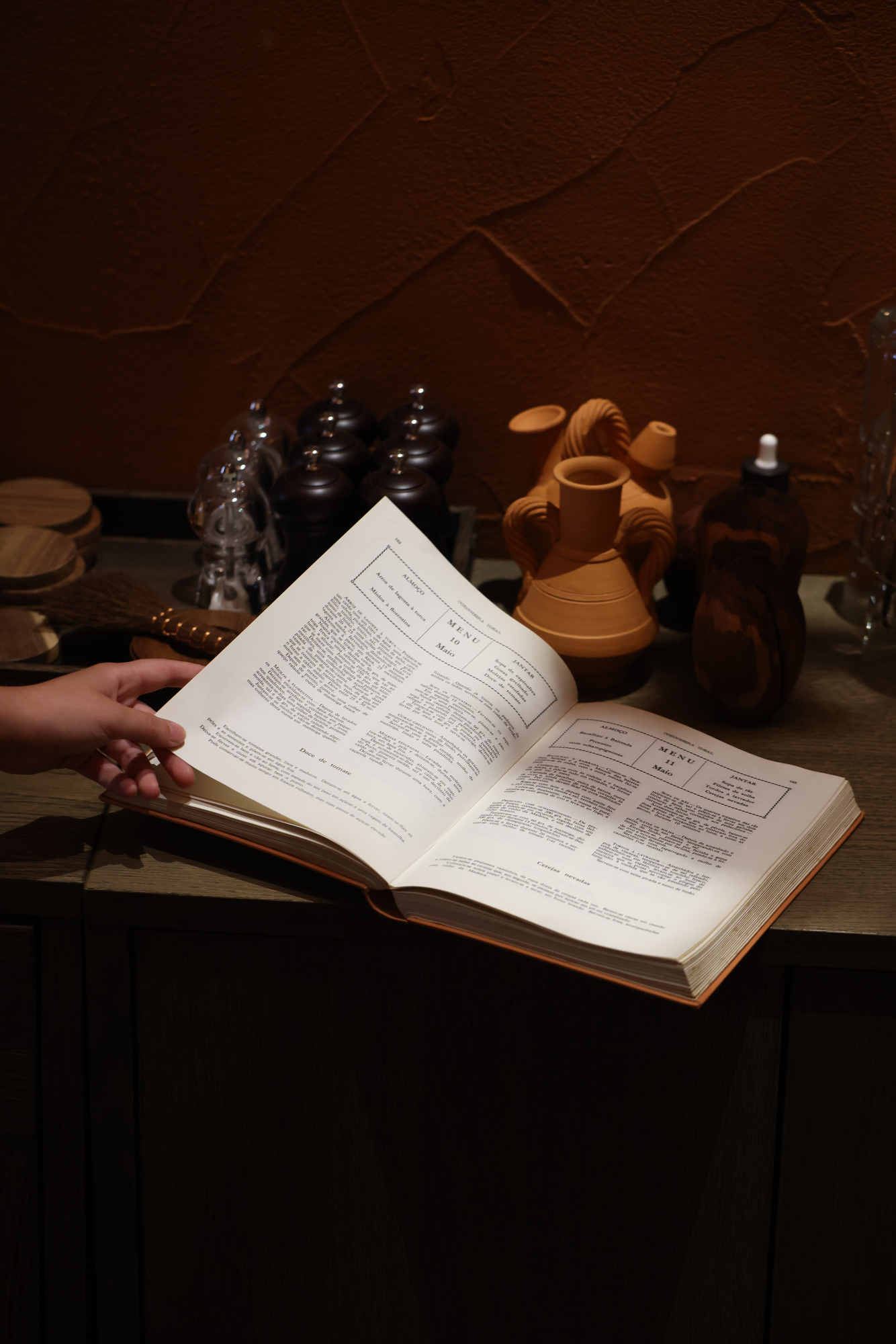
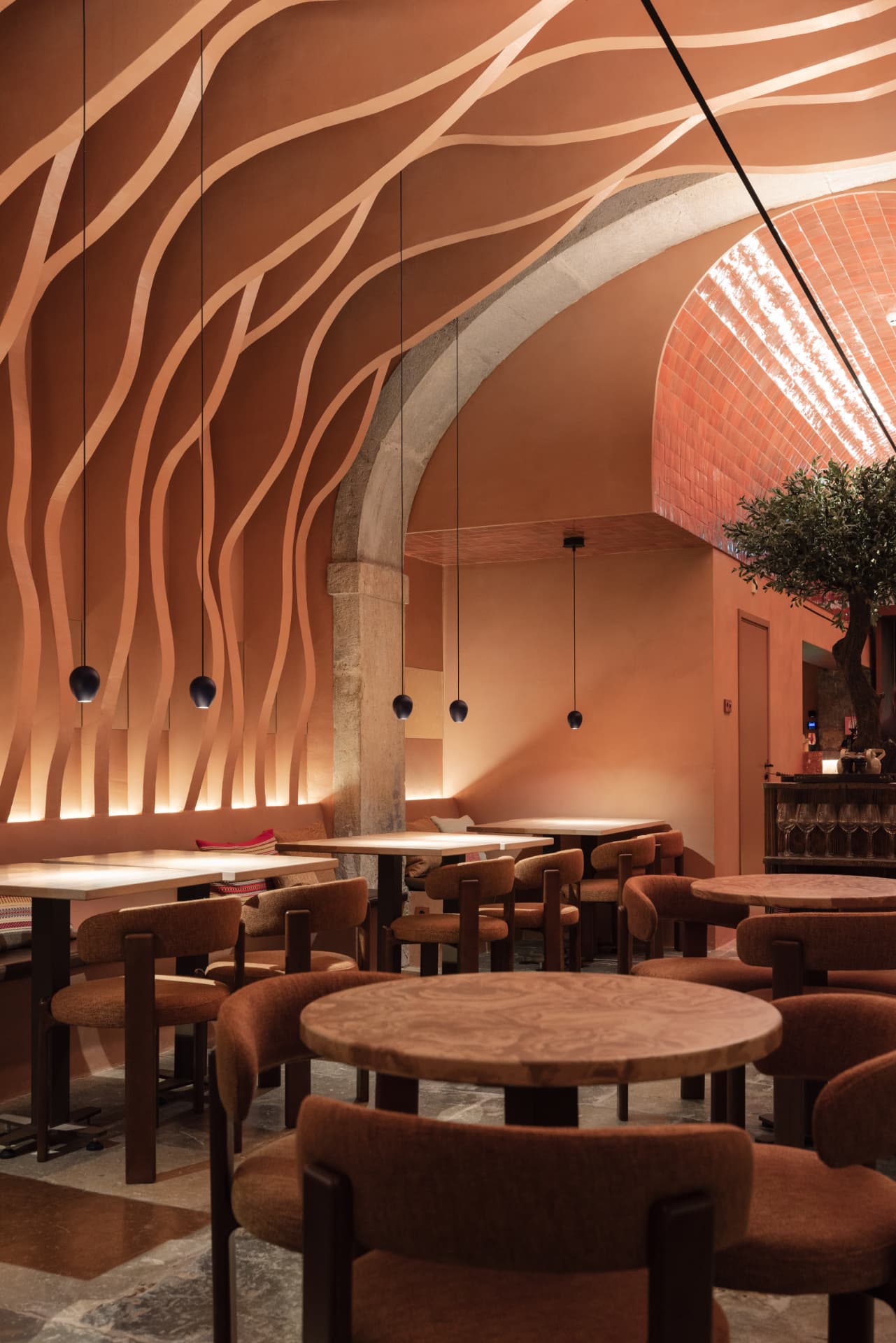
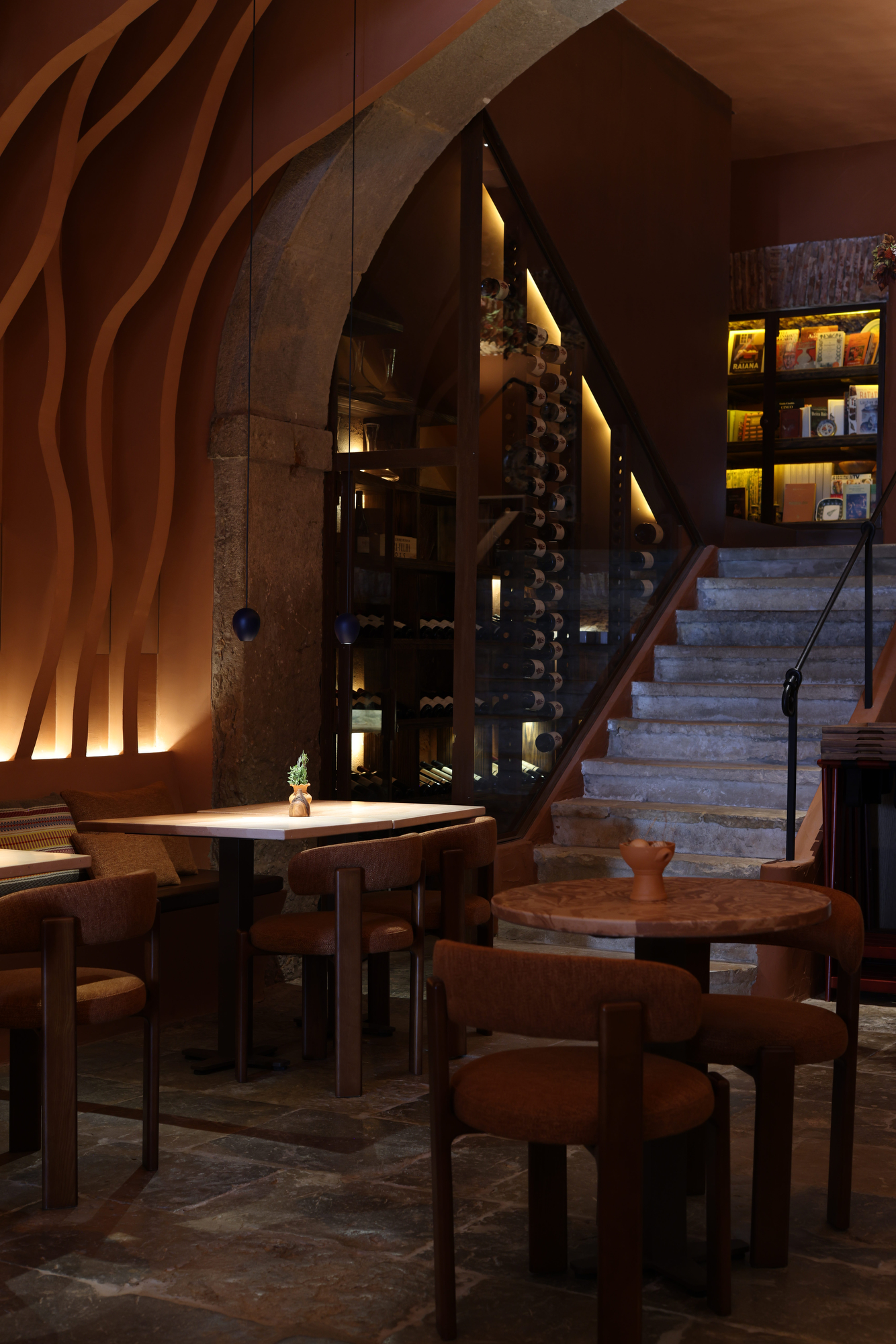
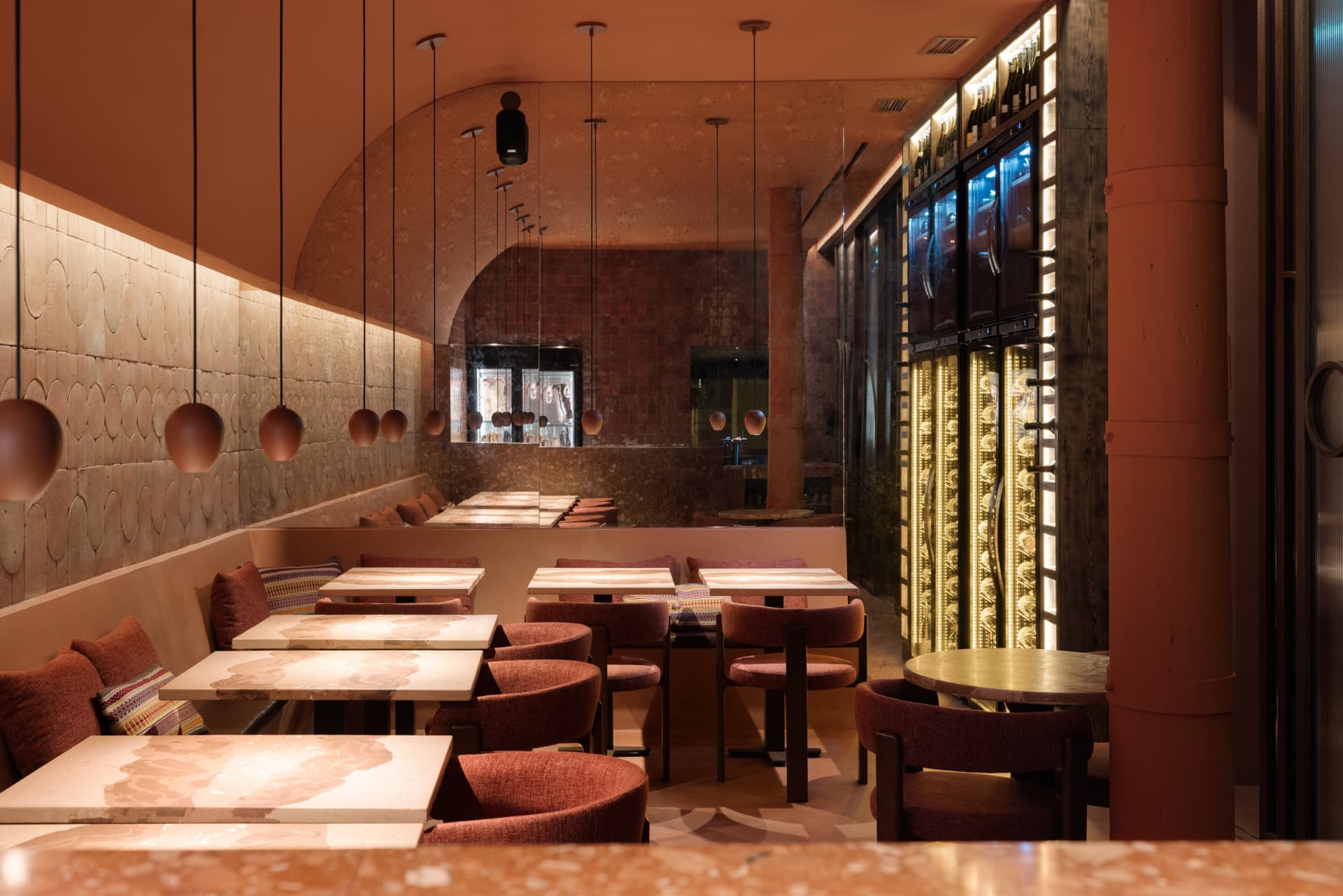
The restaurant occupies a 17th-century stable with its original arches and stone floors: around 200 m² across two floors and 90 seats. Found in poor condition, the building was restored to keep its memory and add a new one.On the ground floor, the room is marked by a life-size replica of an olive tree and by vine branches; the rippling ceiling and walls echo the inside of Alentejo wine amphorae. The refrigerated cellar sits under the stairs and, halfway up, a culinary library gathers more than 100 manuals of traditional and regional cooking, an altar to origins, open to anyone.
Ceiling
The inside of a wine amphora
The ripple running across ceiling and walls echoes the inside of Alentejo wine amphorae, a nod to one partner's lifelong love of wine.
The table
No two pieces alike
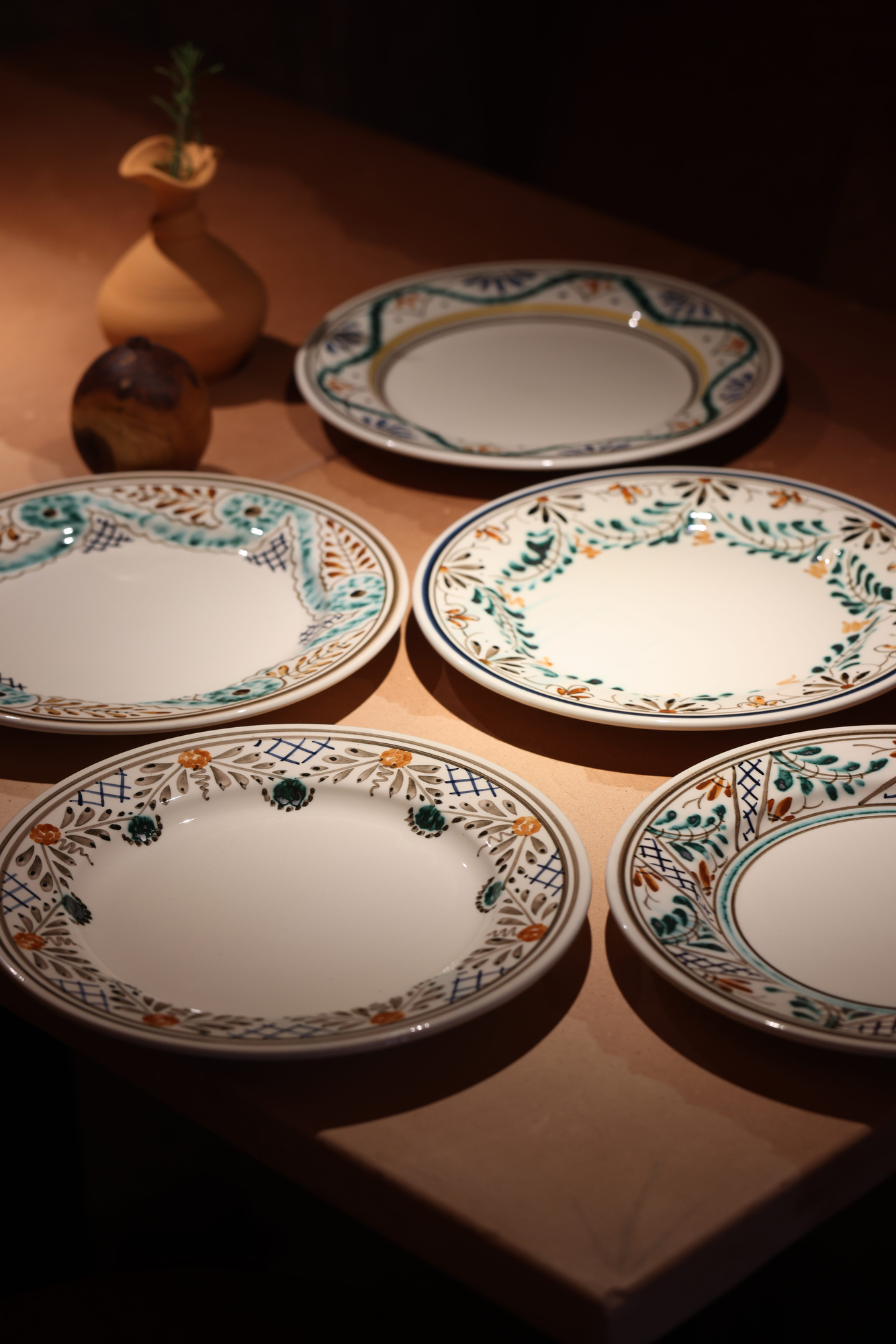
Every piece was chosen with the same care as every ingredient, because both have an origin. It begins on wood by So-So, continues on plates hand-painted by Coimbra craftsman Carlos Tomás, each one signed and none identical, and ends on Vista Alegre porcelain. Even the water jugs, made in Marinha Grande, carry patterns drawn by the team.
Wine
The cellar under the stairs
Refrigerated and glass-fronted, it holds a wine list drawn entirely from Portugal, where each bottle has a region, a producer and an origin. We guide it at the table, dish by dish. The ripple that wraps the room echoes the inside of Alentejo clay amphorae, a tribute to the wine that has always accompanied the Portuguese table.
Service
The art of welcoming well
We explain the dish, suggest the wine and let the conversation carry on. Some dishes arrive whole at the table and return to the kitchen to be carved: the service is part of the recipe.
The table is set
Warm bread, a pot in the middle and time to talk. All that is missing is you.