
Experience
A meal that moves from the rudimentary to the refined.
The story opens on the wooden stage of the couvert, continues on hand-painted plates and closes on festive porcelain. The room follows that arc without ever taking it over.
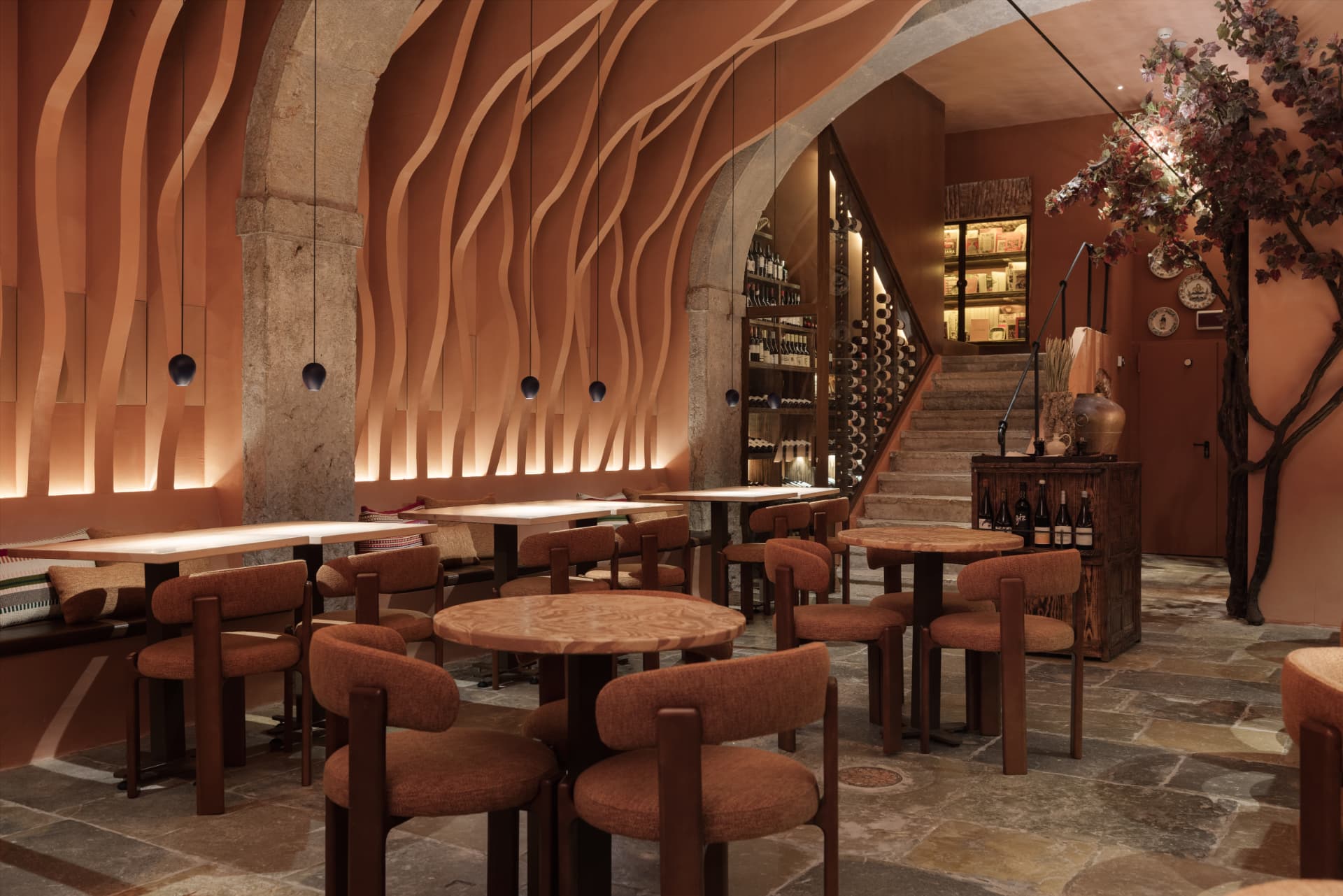
The room
Stone arches, clay and an olive tree at the centre
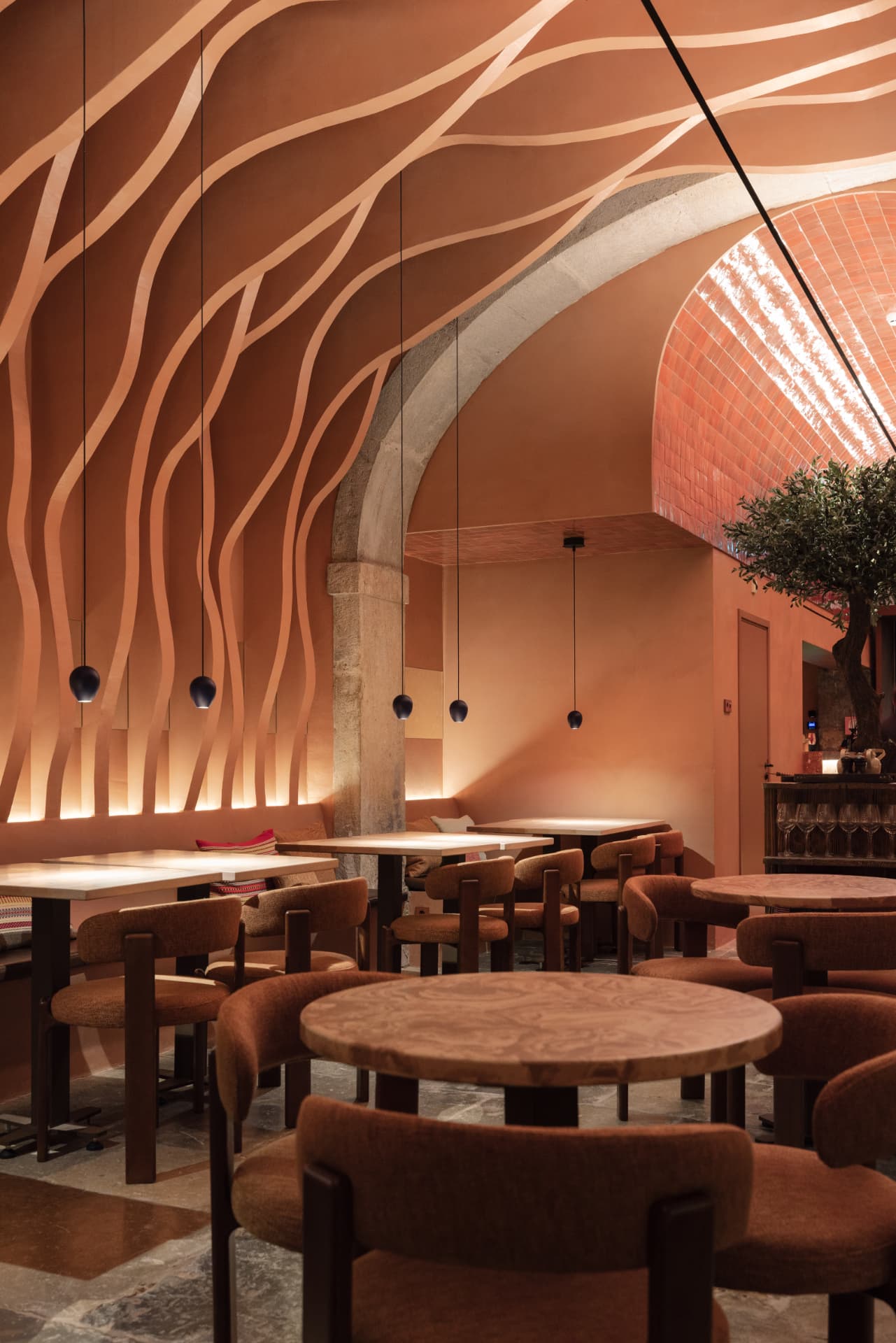
Inside a 17th-century stable, wood, stone and natural materials sit alongside clay tones, cork and Alentejo cushions. The main room is marked by a life-size replica of an olive tree and by vine branches.
Ceiling
The inside of a wine amphora
The ripple running across ceiling and walls echoes the inside of Alentejo wine amphorae, a nod to one partner's lifelong love of wine.
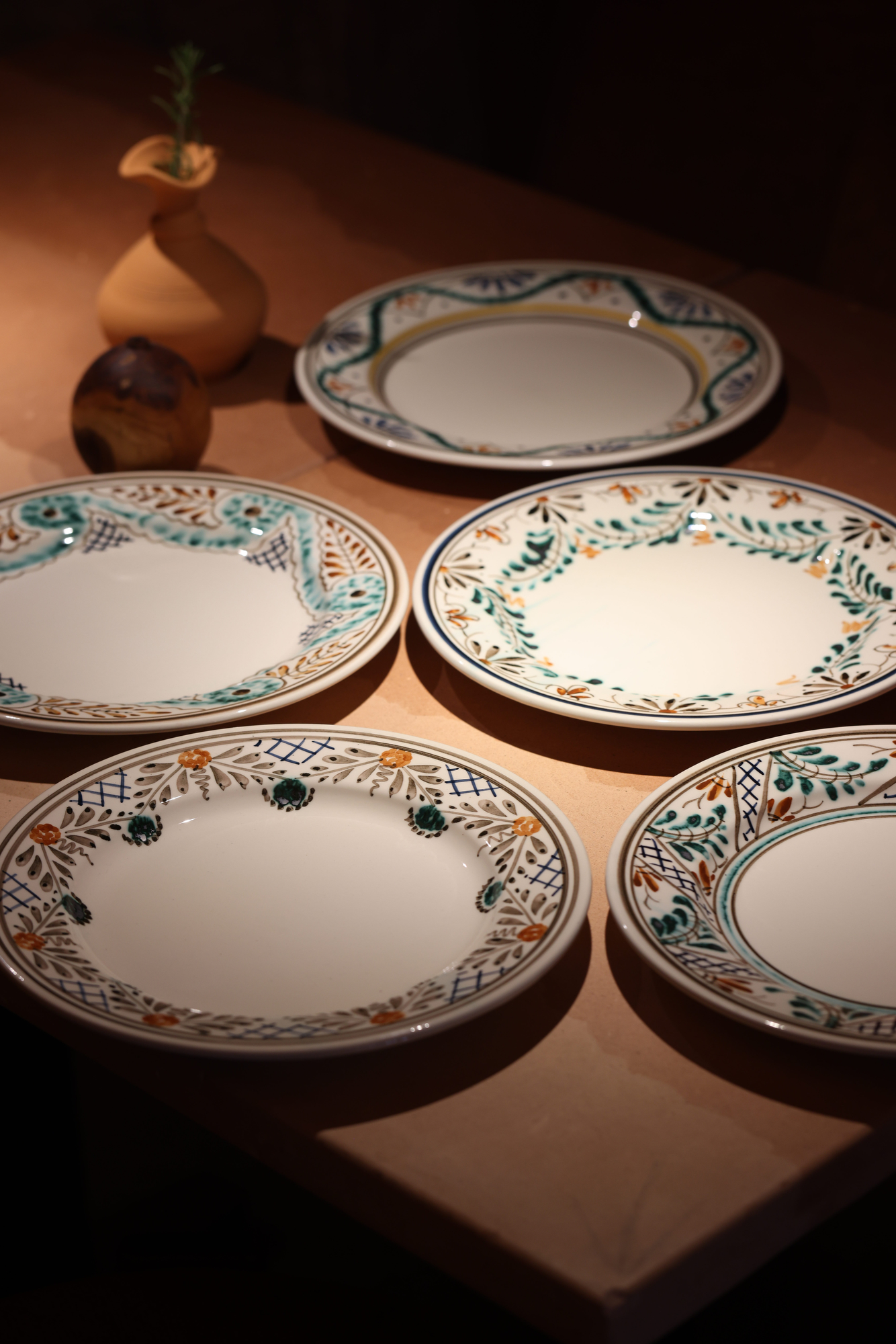
The table
No two pieces alike
It begins on wood by So-So, continues on plates hand-painted by Coimbra craftsman Carlos Tomás, each one signed and none identical, and ends on Vista Alegre porcelain. Even the water jugs, made in Marinha Grande, carry patterns drawn by the team.
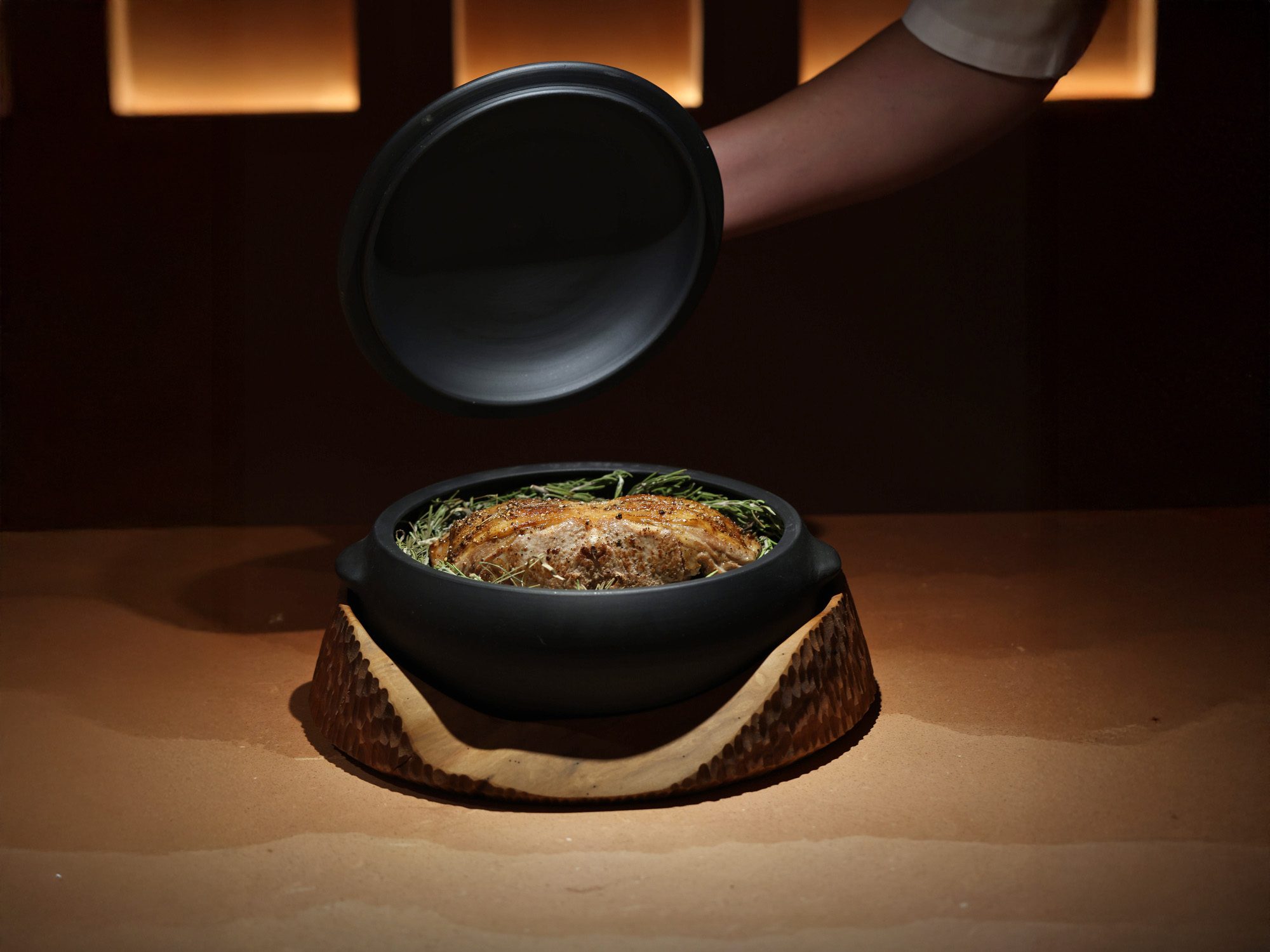
Service
The art of welcoming well
We explain the dish, suggest the wine and let the conversation carry on. Some dishes arrive whole at the table and return to the kitchen to be carved: the service is part of the recipe.
Wine
The cellar under the stairs
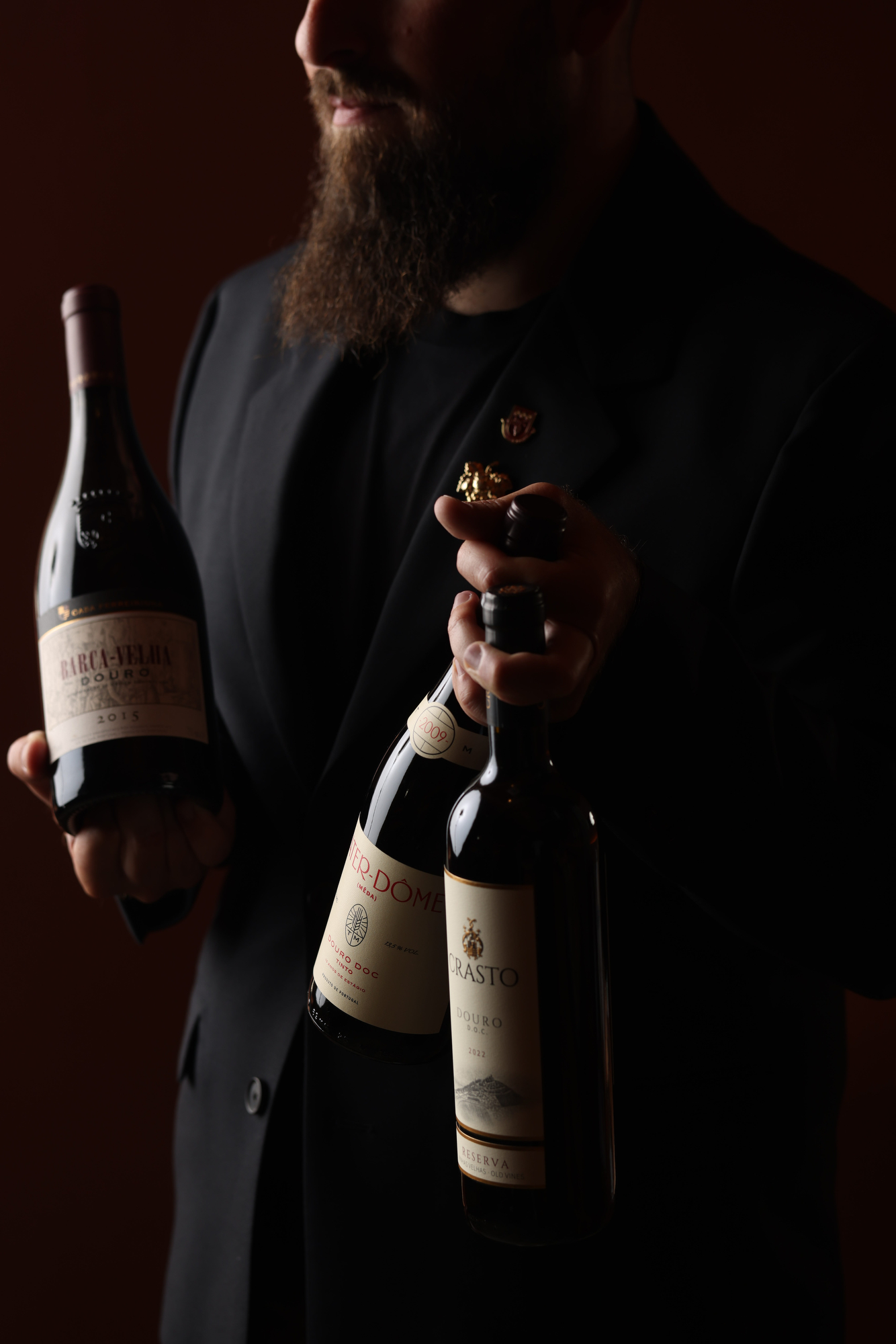
Refrigerated and glass-fronted, it is one of the room's landmarks, with a Portuguese list guided at the table. Halfway up the stairs, the culinary library gathers more than 100 manuals of traditional cooking, open to everyone.
The house
Two floors, a terrace and 95 seats
Ground floor
The main room, the olive tree and the refrigerated cellar.
First floor
A room bookable exclusively, with a sculpture by Grau Cerâmica.
Terrace
Lunch, dinner or simply a drink, under the mural by Rui A. Pereira.
Library
More than 100 cookery manuals, an altar to origins.